
Sample Page

Become a Real Estate Photographer – Is it Worth?

If you’ve ever thought about becoming a real estate photographer, you might be wondering if it’s worth pursuing. As the real estate market continues to thrive, the demand for high-quality real estate photography has skyrocketed. In this article, we’ll explore what it means to be a real estate photographer, the opportunities available, and whether this career path is a worthwhile investment.

Understanding the Role of a Real Estate Photographer

A real estate photographer captures images of properties that are used in listings, brochures, and other marketing materials. Their job involves taking both interior and exterior shots, ensuring that the property looks its best. This might include staging rooms, adjusting lighting, and using specialized equipment like wide-angle lenses and drones. A key part of the real estate photographer job description is to present properties in a way that appeals to potential buyers, highlighting key features and creating a sense of space and light.

Why Real Estate Photography Matters

Real estate photography can make or break a property listing. Good photos attract more potential buyers, leading to faster sales and often higher offers. Professional real estate photographers know how to highlight a property’s best features, making it more appealing to prospective buyers. This skill is especially critical in competitive markets where a visually compelling listing can be the difference between a quick sale and a property that lingers unsold.

Getting Started: Real Estate Photographer Jobs

Entering the field of real estate photography can be daunting, but there are many resources available to help you get started. Look for real estate photographer jobs through online job boards, photography forums, and real estate agencies. Networking with real estate agents and attending local real estate events can also open up opportunities. It’s also beneficial to start building a portfolio of your work to showcase your skills to potential clients. Many successful real estate photographers started by offering their services at discounted rates or even for free to build their initial portfolio.

Useful posts: Take Real Estate Photos With IPhone- 6 Easy Tips For Beginners

Investing in Equipment and Skills

To provide top-notch real estate photo services, you’ll need to invest in quality equipment. This includes a good DSLR camera, lenses, tripods, lighting equipment, and possibly a drone for aerial shots. Additionally, honing your photography skills through courses and practice is essential. Understanding photo editing software like Adobe Photoshop and Lightroom is also crucial for producing polished final images. Consider joining professional photography organizations to stay updated on industry standards and trends, and to gain access to resources that can help you improve your skills.

Cost Considerations: Real Estate Photographer Cost

One of the significant factors to consider is the real estate photographer cost. Initial investments include purchasing equipment, setting up a website, and marketing your services. Ongoing costs might involve travel, software subscriptions, and upgrading your equipment. Pricing your services appropriately is vital to cover these costs and make a profit. Research the average real estate photographer cost in your area to ensure competitive yet profitable pricing. Remember to factor in your time for shooting, editing, and client communication when determining your rates.

The Pros and Cons of a Real Estate Photography Career

The answer to whether becoming a real estate photographer is worth it depends on various factors. The pros include a flexible schedule, creative freedom, and the potential for high earnings. However, the cons might involve irregular income, high initial costs, and the need for continuous learning and adaptation to new technologies. Many photographers find the career fulfilling because it allows them to combine their passion for photography with the opportunity to contribute to the real estate market.

Useful Post: AI Will Replace Real Estate Photography Jobs – Is It True?

Conclusion

In conclusion, a career as a real estate photographer can be rewarding and profitable, especially if you have a passion for photography and real estate. By understanding the role, investing in the right equipment, and building a strong client base, you can create a successful career in real estate photography. Whether you’re looking for real estate photographer jobs or starting your own business, the opportunities in this field are abundant. With dedication and hard work, becoming a real estate photographer can indeed be worth it.

Related Posts: 

How Editing Real Estate Photos Work Like An Expert?

Professional Real Estate Photography Boost Property Sales. What Is The Secret?

The Natural HDR Real Estate Photo Editing- A Step-By-Step Workflow

How Editing Real Estate Photos Work Like an Expert?

Is Editing Real Estate Photos Necessary?

In the current visually-focused real estate market, editing real estate photos is vital with every photographer and businessman. Enhanced images draw in more buyers and present properties at their finest, aiding your agent clients in selling more homes and expanding your photography business.

This guide will teach you how to edit real estate photos like a professional using 16 straightforward yet effective techniques. These methods will help you master real estate photo editing and elevate your photography skills.

16 Steps for Editing Real Estate Photos Like a Pro

Step 1: Brightness & Color Correction

The foundation of any real estate photo enhancement starts with brightness, exposure, and color correction. The common editing real estate photo software like Lightroom and Photoshop are essential for these adjustments. Mastering these basics can transform your photos from dull to stunning.

Step 2: Object Removal & Decluttering

Remove clutter to make your real estate images look more professional. 

Imagine a serene garden ruined by a car, or wires and clutter disrupting interior shots. Photoshop can fix these common issues.

Use the ‘Clone Stamp’ or ‘Healing Brush’ tools to eliminate unwanted objects or distractions from your photos, such as cords and wires, pet toys, or stray items.

Step 3: HDR Blending & Bracketing

Merge multiple exposures using HDR blending to create well-exposed images with more detail.
This technique enables you to combine multiple bracketed exposure shots (typically 3 or more) using photo editing software to produce a single image with balanced exposure across highlights, mid-tones, and shadows.

This enhances the details in your images and makes them stand out.

Step 4: Horizontal & Vertical Lines Correction

Correcting distortions caused by lens curvature or camera tilt ensures straight lines, crucial for real estate photos.


Unwanted distortions often result from lens curvature, space shape, and slight camera tilts. Fortunately, vertical lines correction in post-processing can rescue your photos. For real estate photographers, this technique is crucial, straightening curves and aligning every line perfectly to the frame’s edge

Step 5: Noise Reduction

Reduce digital noise for clearer images, especially those taken in low light.

Your vibrant, detailed photos can be marred by unwanted fuzzy dots, diminishing their appeal. Noise or grain often results from low light, digital errors, long exposures, or camera sensor limits. 

Fortunately, you can easily fix grainy photos with the right adjustments, restoring the clarity and striking definition essential for real estate photography.

Step 6: Image Sharpening

Enhance edge definition and add detail to your photos by sharpening them.

Sharpness is vital in real estate photography. Mastering Photoshop’s image sharpening can enhance your property shots, adding depth, detail, and contrast to architectural elements.

Edge definition greatly impacts visual appeal. Almost every photo, whether digital or scanned, benefits from sharpening.

Using Photoshop’s tools to reveal hidden details elevates your photography, captivating potential buyers.

Step 7: Sky Replacement

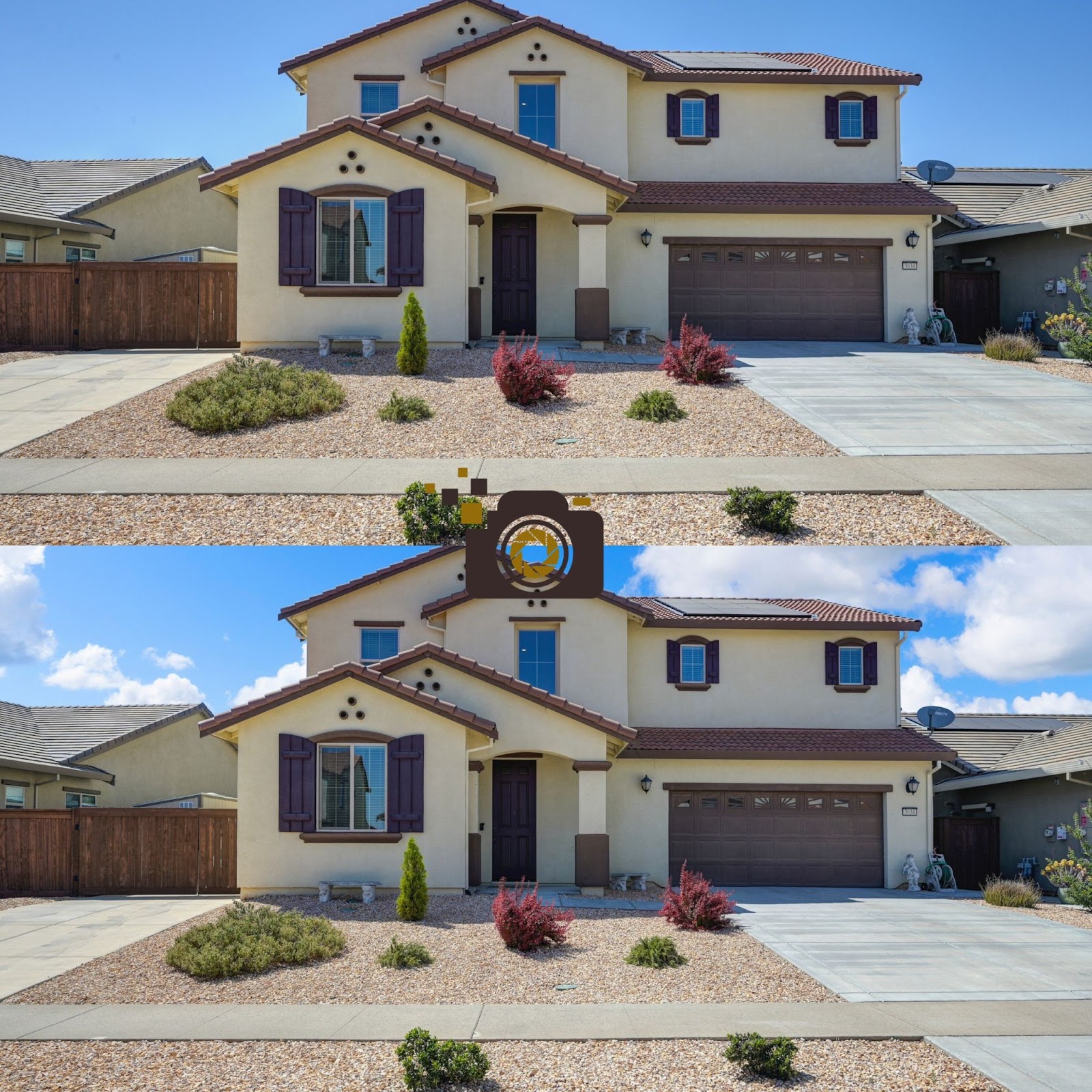
Replace overcast skies with vibrant ones to make your real estate photos more appealing.

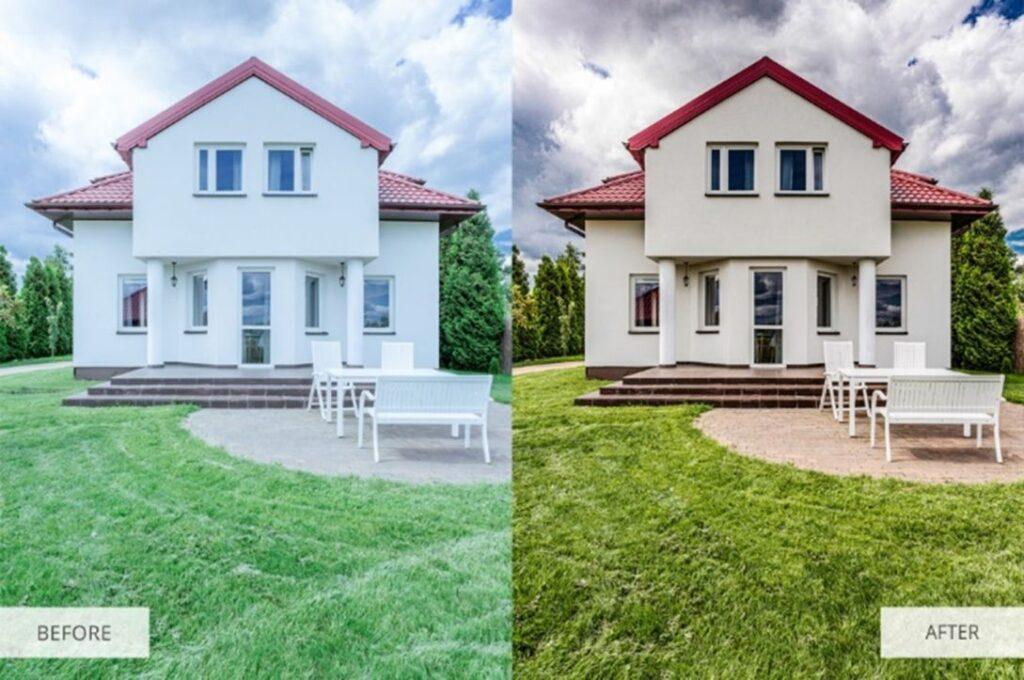
Clear skies make real estate photos captivating, while overcast conditions can dull their appeal. Modern editing software, like Photoshop, allows for easy sky replacement, enhancing property charm and brightness. Mastering this technique frees photographers from weather constraints, transforming dull skies into vibrant, summery backdrops.

Step 8: Day-to-Dusk Conversions

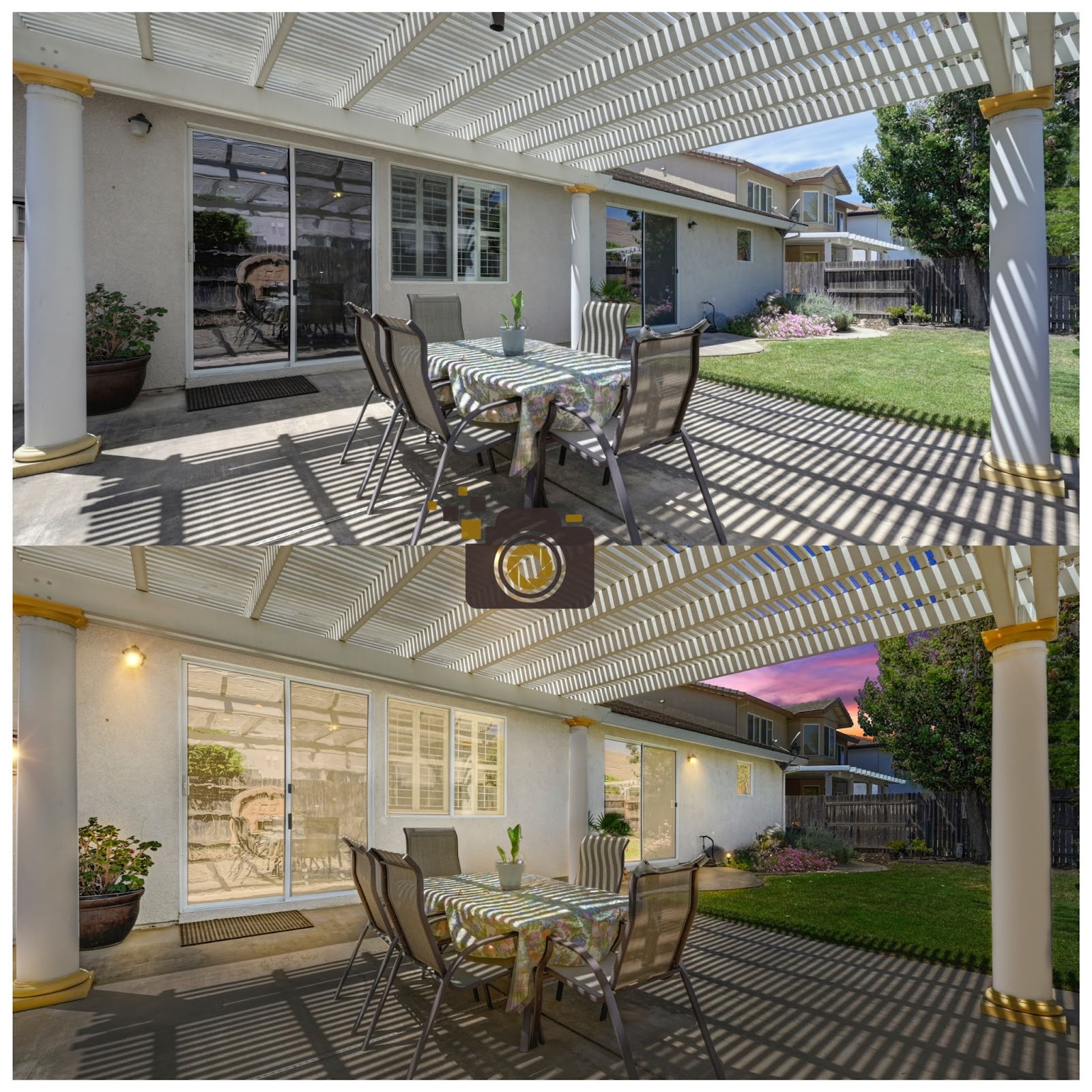
Turn day shots into dusk by darkening the sky and adjusting lighting to create an inviting atmosphere.

Mastery of sky replacement enhances listing appeal in real estate photography, distinguishing you in the industry. Ensure new sky lighting matches.

Step 9: Color Cast Removal

Eliminate unwanted color casts caused by ambient lighting for more natural-looking photos.

Step 10: Lawn/Landscape Enhancements

Enhance the look of lawns and landscaping to improve curb appeal.

Fortunately, you can quickly improve the appearance of brown, patchy lawns by adjusting saturation and luminance sliders to create a fresh, green look. This simple technique greatly enhances curb appeal. Utilize Photoshop to tweak lawn color and enhance landscaping in your photos.

Step 11: Window Masking

Control bright windows that can distract from interior details by masking them in Photoshop.

Bright windows can distract from interior details, causing glare and blurriness in photos. Window masking in real estate editing addresses these issues, allowing alteration of scenery and enhancing images.

Step 12: Eliminating Ghosting

Remove ghosting caused by HDR techniques or moving objects for cleaner images.

Ghosting is utilized in some artistic photography to augment the mood or ambiance of an image. Nonetheless, in real estate photography, ghosting detracts from the professionalism and completion of the photoshoot. 

Fortunately, eliminating ghosting in Photoshop is straightforward for those familiar with the software.

Step 13: Removing Shadows

Balance lighting in images by reducing harsh shadows and glare.

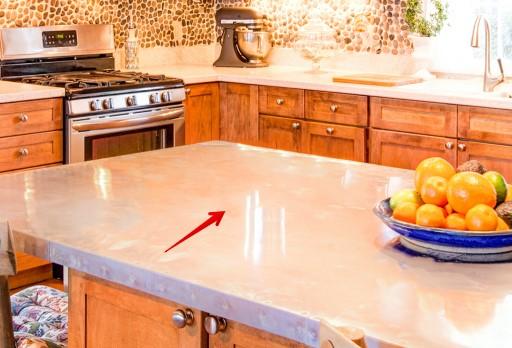
In some instances, photos may exhibit deep shadows and glare from light sources, which can detract from their quality. While shadows can enhance artistic appeal, they often create distractions, especially in real estate photography.

Real estate photographers can rectify these issues by uncovering hidden details in shadows, thus balancing lighting and reducing their harshness. This adjustment minimizes glare, resulting in a more natural and attractive appearance.

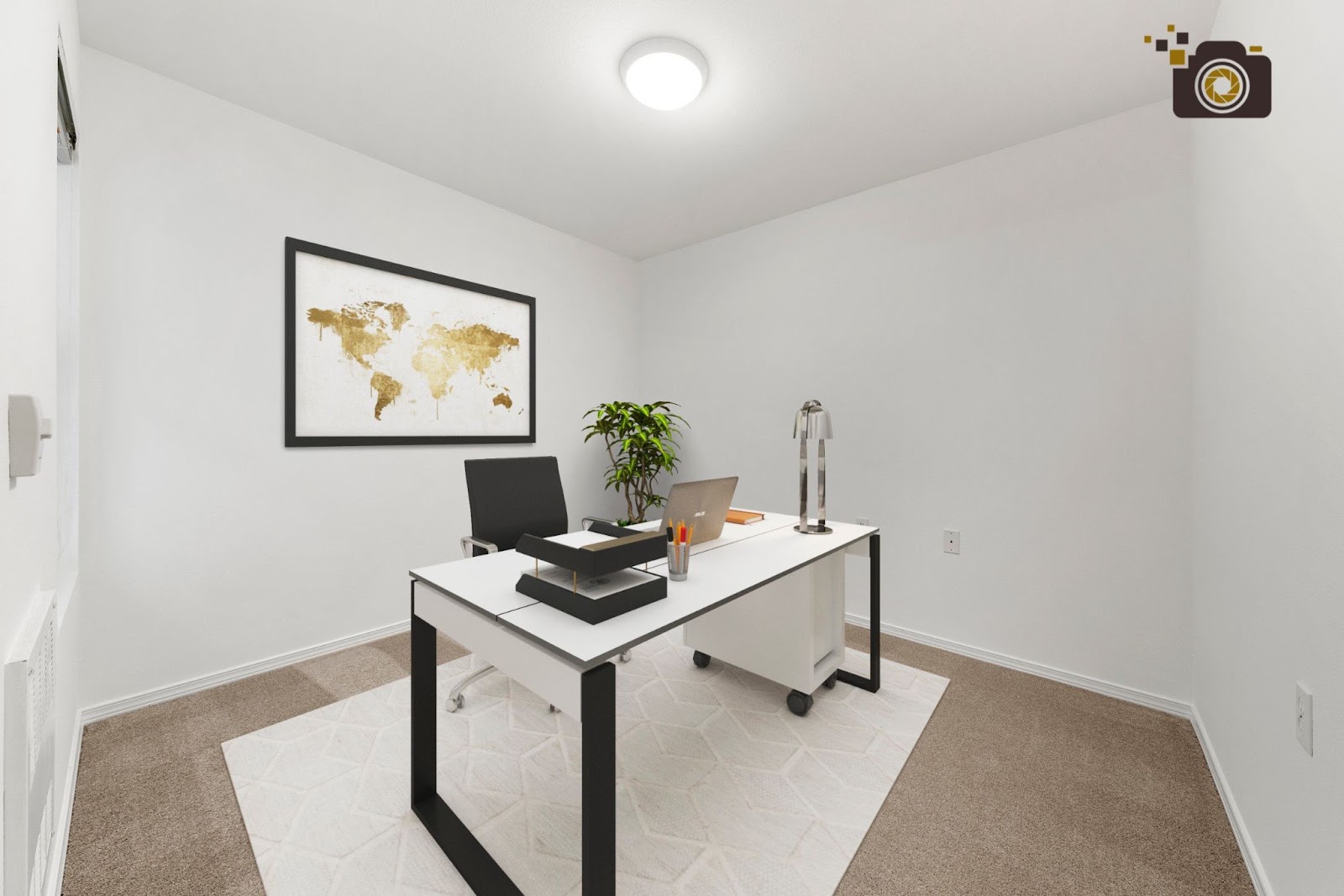
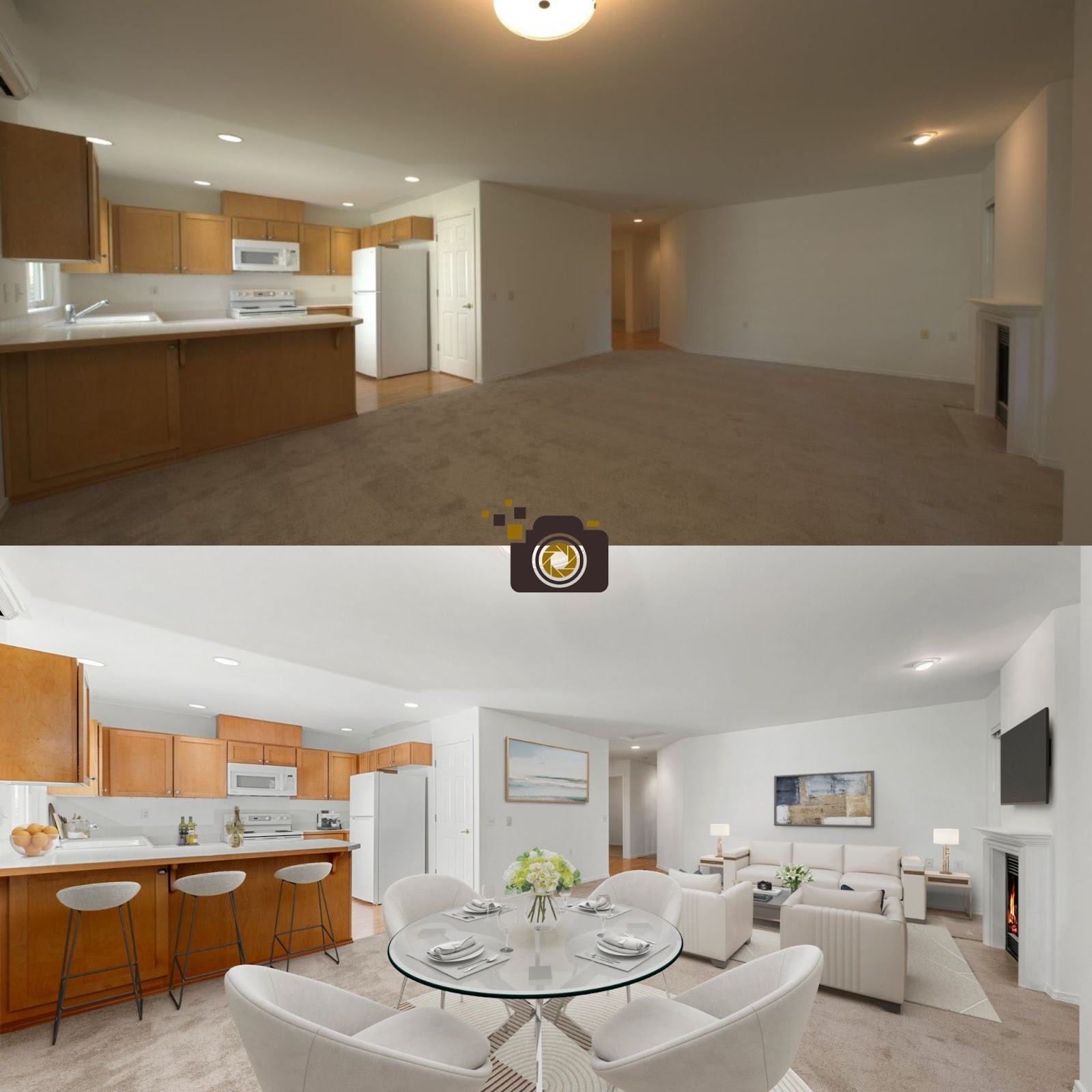
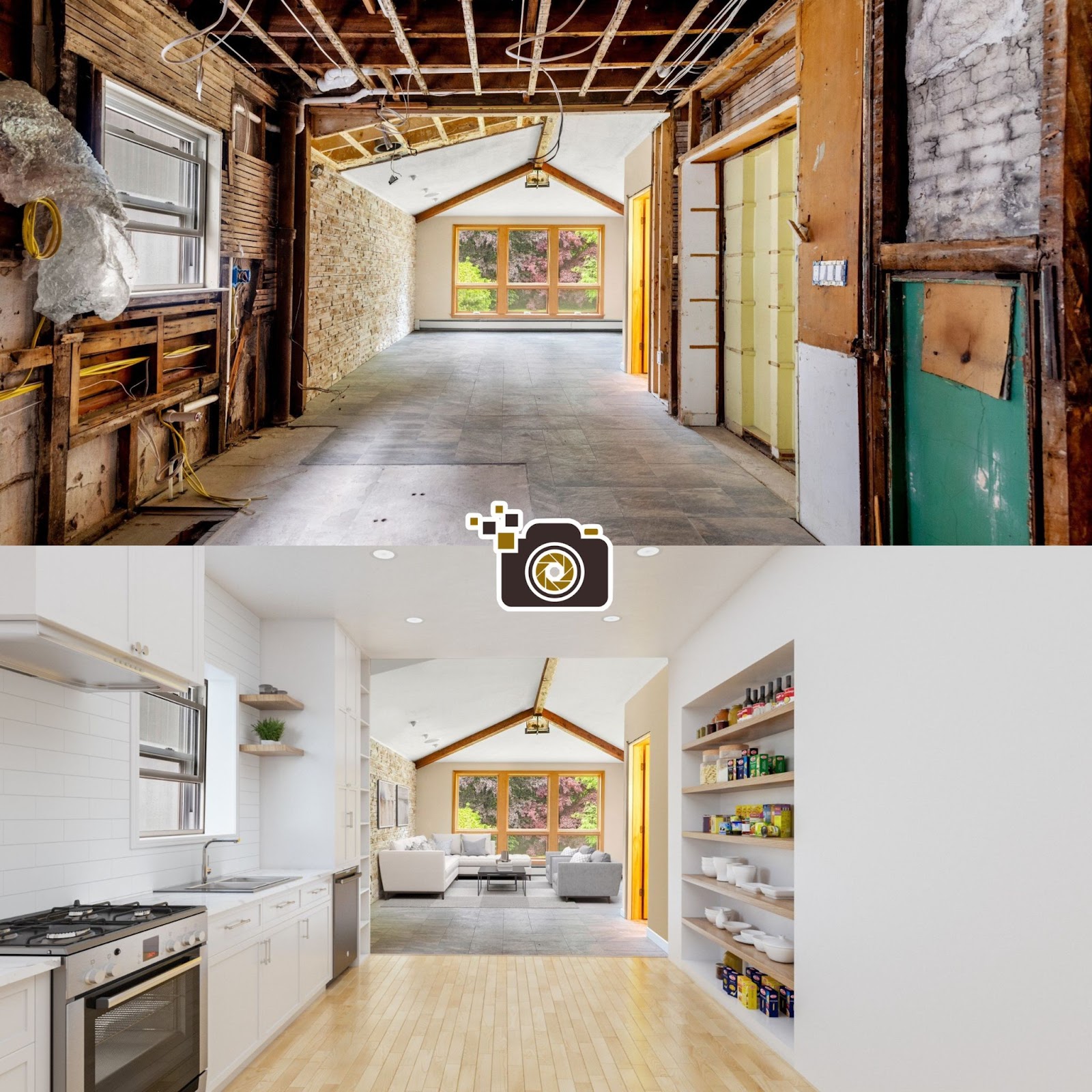
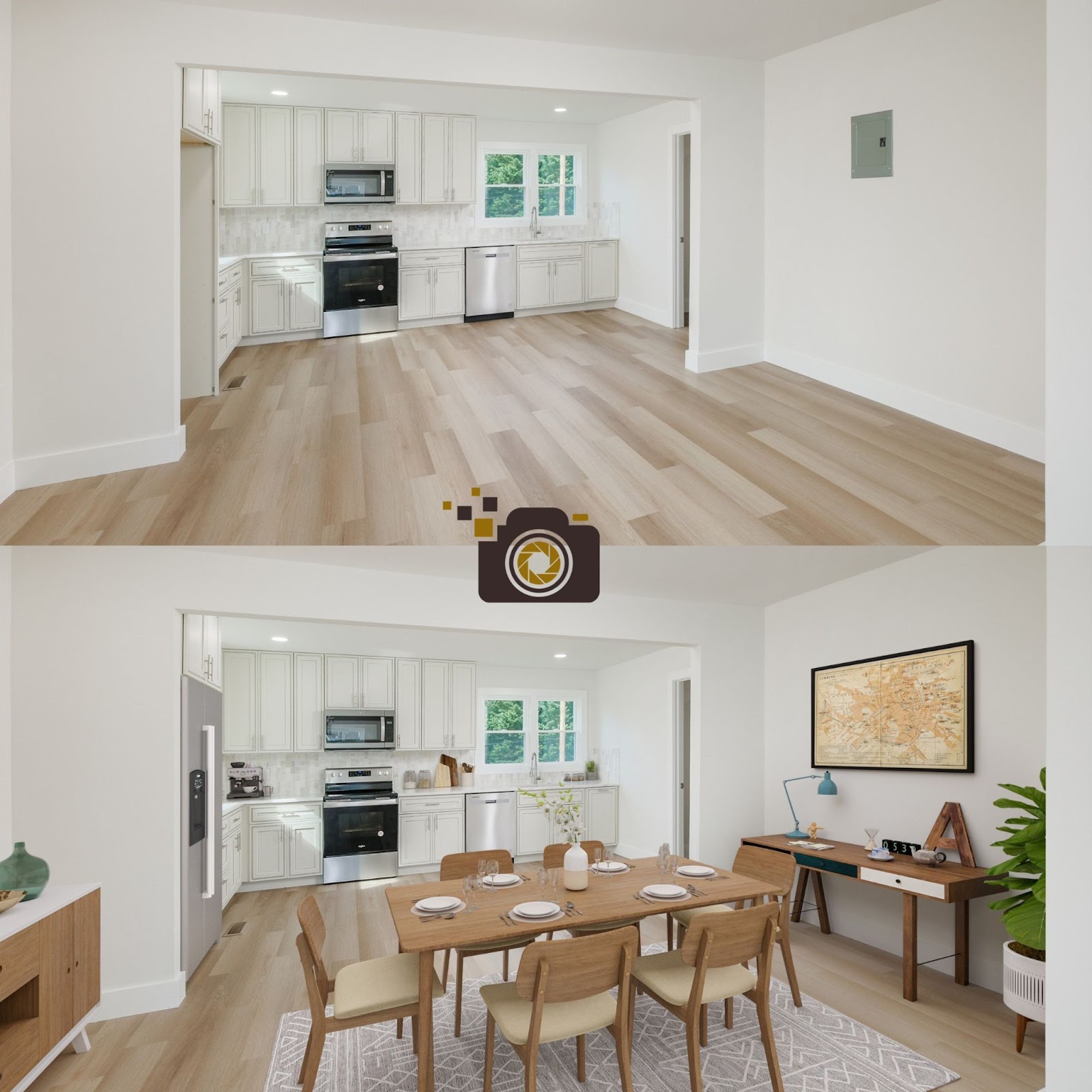
Step 14: Leveraging Virtual Staging

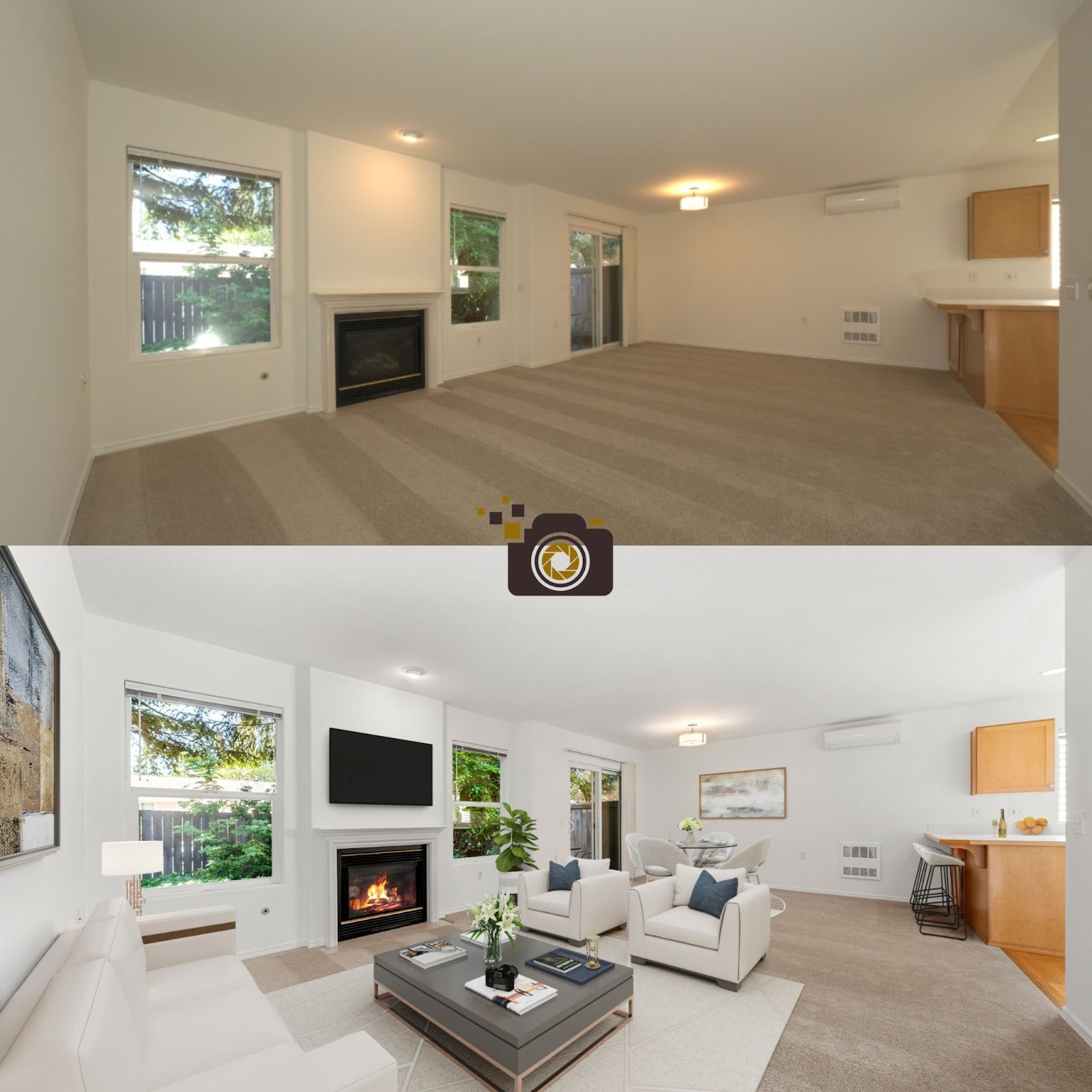
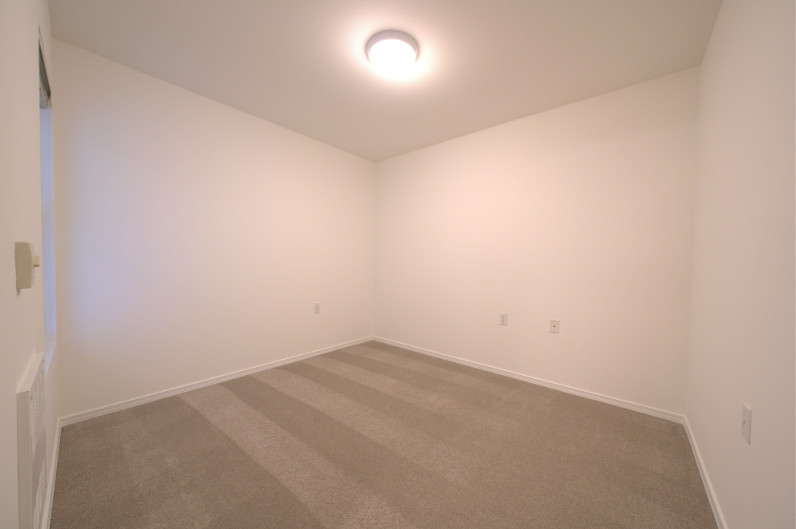
Use virtual staging to insert digital furniture into empty homes, making them more appealing to buyers.

This entails adding digital furniture to your images to create a modern, comfortable, and inviting atmosphere that will resonate with your intended audience.

Step 15: Adding Text/Watermarking Your Images

Add text or watermarks for branding and copyright protection.

Watermarks safeguard photographers’ work, preventing unauthorized use by clearly marking image ownership. 

Adding business names or text to real estate photos can boost brand recognition. Photoshop facilitates these essential edits, ensuring images are protected and branded effectively.

Step 16: Performing Batch Edits

Save time by applying common adjustments to multiple images simultaneously.

Finally, mastering batch editing saves time by applying common adjustments to multiple images simultaneously, ensuring portfolio consistency. 

The process is simple: make edits to one photo and sync these changes across the rest of the images for efficient retouching and adjustments.

So How Do You Think Editing Real Estate Photos Affects Business?

In 2021, 99% of potential homebuyers searched for properties online, with homes featuring exceptional listing photos commanding a 47% higher asking price per square foot. This underscores the importance of high-quality real estate images in attracting online buyers and facilitating home sales.

Moreover, regardless of photographic skill, superior real estate photography requires post-processing. Elements like adverse weather, artificial lighting, and clutter can distort and diminish photo quality.

As a real estate photographer, your role extends beyond capturing images; you must also deliver meticulously edited photos that intrigue viewers and encourage further exploration of the property. Mastering color-correction techniques is crucial for enhancing photos, ensuring accurate representation and enticing potential buyers.

Conclusion

High-quality real estate photos are essential in capturing buyers’ attention and selling homes. By mastering these 16 steps, you can enhance your real estate photography and grow your business.

However, even the most skilled photographers may benefit from professional photo editing services to truly make their listings shine. That’s where BeatColor comes in. Renowned for their reliability, quality, and affordability, BeatColor is the ideal partner for enhancing your real estate photos. Their expertise can transform ordinary images into stunning visual assets that effectively capture buyers’ attention and drive engagement.

Related posts:
Best And Free Way To Speed Up Your Real Estate Photography Workflow
AI Will Replace Real Estate Photography Jobs – Is It True?
HDR Real Estate Photography – Top 10 Secrets You Should Know!

HDR Real Estate Photography – Top 10 Secrets You Should Know!

The importance of stunning photography cannot be overstated in the rapidly evolving realm of real estate photography, where first impressions can make or break a sale. High Dynamic Range (HDR) photography has emerged as a game-changer in the industry, allowing photographers to capture vibrant, detailed images that showcase a property in its best light. However, mastering HDR real estate photography requires more than just technical know-how. To truly excel in this field, you need insider tips and tricks that go beyond the basics. 

So, let’s dive into the lesser-known secrets of HDR real estate photography that can elevate your skills to the next level!

For those who are concerned about HDR photography, kindly read more here:
https://fotorising.com/the-natural-hdr-real-estate-photo-editing-a-step-by-step-workflow/

10 Useful Tips to Master Shooting HDR Photography!

Enhance your photography skills with these essential tips. Discover how to master HDR photography with our expert advice.

Preparation is Key 

Before you even pick up your camera, take the time to prepare the property for the shoot. Decluttering, staging, and ensuring proper lighting are essential steps that can significantly enhance the final result. Remember, a well-prepared space makes the photographer’s job much easier.

HDR real estate photography

Choose the Right Time of Day

Lighting plays a crucial role in HDR photography, so timing is everything. Aim to shoot during the golden hours—early morning or late afternoon—when the natural light is soft and warm. Avoid harsh midday sunlight, as it can create unflattering shadows and highlights.

Invest in Quality Equipment

While HDR photography can be achieved with a basic camera setup, investing in quality equipment can take your images to the next level. A DSLR or mirrorless camera with manual controls, a sturdy tripod, and a wide-angle lens are essential tools for capturing sharp, distortion-free images.

Bracketing is Your Best Friend

Bracketing, the process of capturing multiple exposures of the same scene at different exposure levels, is the foundation of HDR photography. Experiment with different bracketing settings to achieve the perfect balance of highlights, shadows, and mid-tones in your images.

HDR real estate photography
The high dynamic range (HDR) contains different exposures

Master the Art of Post-Processing

HDR photography doesn’t end when you press the shutter button; it continues in the digital darkroom. Familiarize yourself with post-processing software like Adobe Lightroom or HDR Efex Pro, and learn how to blend and tone-map your bracketed exposures to create stunning final images.

Pay Attention to Composition

Composition can make or break a photograph, so don’t underestimate its importance. Use leading lines, framing, and symmetry to guide the viewer’s eye through the image and highlight the property’s best features. Experiment with different angles and perspectives to find the most captivating compositions.

real estate photo editing

Highlight Unique Selling Points

Every property has unique selling points that set it apart from the competition. Whether it’s a breathtaking view, a luxurious pool, or a cozy fireplace, make sure to highlight these features in your photographs. Use composition and lighting techniques to draw attention to these focal points and create a strong emotional connection with potential buyers.

Think Like a Homeowner

Put yourself in the shoes of a potential buyer and consider what they would want to see in a property listing. Pay attention to details like cleanliness, organization, and maintenance, and make sure these aspects are reflected in your photographs. Remember, you’re not just selling a house; you’re selling a lifestyle.

Stay Flexible and Adapt

No two properties are alike, so be prepared to adapt your approach based on the unique characteristics of each space. Whether you’re shooting a cozy cottage or a sprawling mansion, stay flexible and open to new ideas. Embrace challenges as opportunities for growth and creativity.

real estate photo editing

Continuous Learning is Essential

The world of photography is constantly evolving, so never stop learning and honing your skills. Attend workshops, read books, watch tutorials, and seek feedback from peers to stay inspired and improve your craft. Remember, mastery is a journey, not a destination.

Final Thoughts

In conclusion, HDR real estate photography is a powerful tool for showcasing properties in their best light and attracting potential buyers. By following these 10 useful tips, you can elevate your photography skills and create compelling images that leave a lasting impression. So, grab your camera, embrace the challenges, and unlock the secrets of HDR real estate photography!

AI Will Replace Real Estate Photography Jobs – Is it True?

Artificial Intelligence (AI) and humans are distinct entities but have an interconnected relationship in modern life. In many areas, AI has become a useful tool that helps humans work faster, more efficiently, and more accurately. However, many people question whether AI is replacing humans in certain fields in general and in real estate photography in particular and creating competition with human labor. 

What is Artificial Intelligence (AI) ?

To whom it may concern, Artificial Intelligence (AI) is a field of computer science focused on studying, designing, and developing algorithms and computer systems capable of performing intelligent tasks that traditionally require human intelligence.

The formation and development of AI began in the 1950s when pioneering computer scientists started researching how to simulate human intelligence using computers. Early AI research concentrated on building simple computer programs to solve mathematical and logical problems.

However, with the advancement of techniques and technologies, AI has made remarkable real estate photo shooting and processing progress. AI systems have also been developed for automating tasks in manufacturing and enhancing marketing success for real estate agents and providers.

Great Potentials of AI in Real Estate Photography 

Some believe that the development of AI will eventually lead to a complete replacement of humans. They argue that AI will be able to learn and evolve rapidly, surpassing human capabilities in acquiring and advancing knowledge.

This would render many current human jobs redundant, potentially replaced entirely by AI. Examples of AI’s benefits in real estate photography could be listed below: 

  1. Prospering working efficiency 

AI-powered cameras and drones can automate the process of capturing high-quality, standardized images of properties, ensuring consistency and efficiency. This can free up human photographers to focus on more creative and strategic aspects of the job.

Ai-automate-operational-process-in-real-estate-photography
  1. Driving buyer engagement 

AI has demonstrated impressive capabilities when it comes to generating AI-powered cameras and drones can automate the process of capturing high-quality, standardized images of properties, ensuring consistency and efficiency. This can free up human photographers to focus on more creative and strategic aspects of the job.

  1. Creating consistency 

AI can streamline the post-processing workflow by automating tasks such as image cropping, resizing, and basic editing, allowing real estate editors and photographers to maintain consistency 

>> Read more: Impacts of AI in Real Estate Photography

Limitations of AI in Real Estate Photography

While AI can automate certain tasks, it currently faces limitations that prevent it from fully replacing the work of professional real estate photographers. 

Current AI systems excel at tasks like image processing, object detection, and color correction. However, they struggle to match the creative vision and artistic flair that skilled human photographers bring to real estate photography. AI-generated photos may look technically proficient but lack the unique perspective and emotional appeal of human-shot images.

  1. Inability to Adapt to Changing Conditions: Real estate photography often involves capturing properties in different lighting conditions, weather, and settings. AI systems can have difficulty adjusting to these dynamic environments and may produce inconsistent results compared to an experienced human photographer who can adapt on the fly.
  2. Lack of Contextual Understanding: Effective real estate photography requires an understanding of the property, its features, and how to best showcase them to potential buyers. AI may struggle to comprehend the nuances and emotional aspects that a human photographer can intuit to create impactful images.
  3. Limitations in Post-Processing: While AI can assist with basic photo editing tasks, the more complex and subjective aspects of post-processing, such as image composition, color grading, and creative enhancements, are often better handled by skilled human editors.
  4. Difficulty Capturing Unique Perspectives: Experienced real estate photographers can utilize various techniques, such as drones, wide-angle lenses, and unique vantage points, to capture distinctive and captivating images of a property. Current AI systems may be limited in their ability to replicate these creative approaches.
  5. Lack of Interpersonal Skills: Real estate photography often involves interacting with clients, property owners, and other stakeholders. Human photographers can leverage their interpersonal skills to understand the client’s needs, build rapport, and deliver a personalized service, which can be challenging for AI systems to replicate.

Integrating AI and Real Estate Photographers

Rather than a complete replacement, the future of real estate photography lies in the integration of AI and human expertise. AI can assist photographers by automating repetitive tasks, providing camera settings recommendations, and streamlining the post-processing and presentation of images. The combination of the photographer’s creativity and the processing power of AI can result in a more efficient, cost-effective, and higher-quality real estate photography workflow.

The combination of the photographer’s creativity, technical skills, and attention to detail, combined with the processing power and automation capabilities of AI, can result in a synergistic partnership that enhances the overall quality and effectiveness of real estate marketing materials.

Conclusion

While AI is undoubtedly transforming the real estate photography industry, it is unlikely to completely take over real estate photography expertise, as these possess unique traits such as flexibility, creativity, and emotional perception.  We must recognize that AI is merely a support tool that needs to be used wisely and appropriately. The future of real estate photography lies in the synergistic partnership between AI and the skilled human photographer.