
Hit enter to search or ESC to close
Trending Now
Camera choice makes a real difference in how professional a real estate listing looks. The right camera captures sharp detail, handles tricky interior lighting, and gives you the flexibility to shoot everything from tight bedrooms to sweeping exterior shots. This guide breaks down what to look for in a camera for real estate work and highlights the features that matter most.
Why Camera Choice Matters in Real Estate Photography
Real estate photos face unique challenges that other photography genres don't. Interiors often mix bright window light with dim corners. Rooms can feel cramped without the right lens. Buyers judge a property within seconds of seeing a photo, so image quality directly affects engagement. A capable camera helps handle these challenges consistently, shoot after shoot.
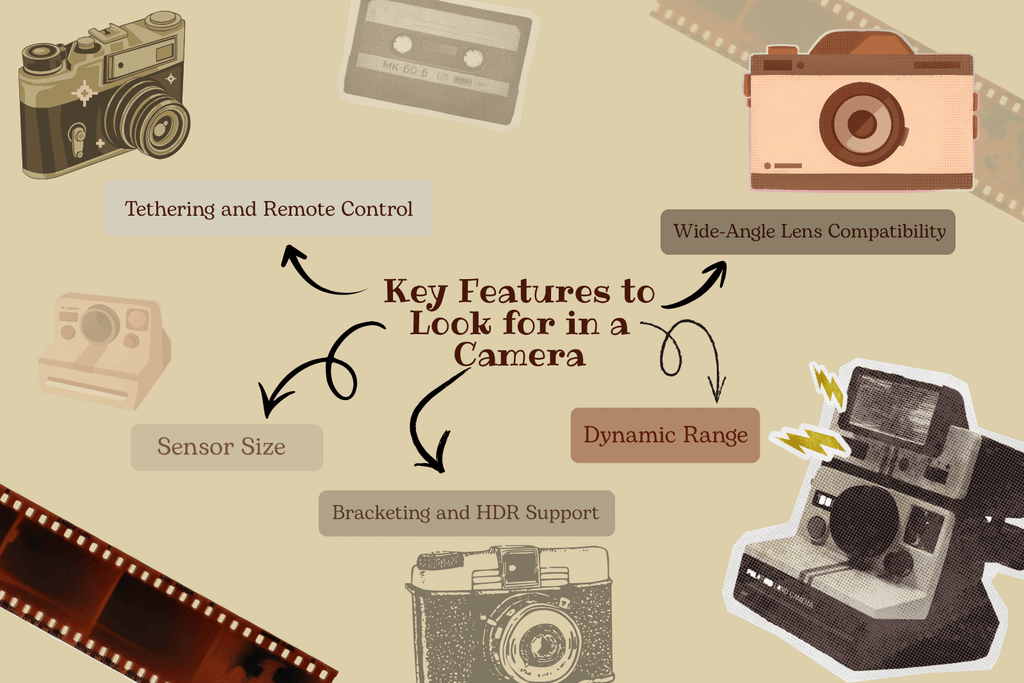
Key Features to Look for in a Camera
Sensor Size
Full-frame sensors generally perform better in low light and capture more dynamic range, which matters when balancing bright windows against darker interior spaces. However, crop-sensor cameras are lighter, more affordable, and still capable of excellent results for most listings. For photographers shooting large, high-end properties regularly, a full-frame camera often justifies the investment.
Dynamic Range
Dynamic range refers to how well a camera captures detail in both shadows and highlights within the same shot. Since real estate interiors often have strong contrast between window light and interior shadows, a camera with strong dynamic range reduces the need for heavy editing later. This feature matters more than megapixel count for most real estate work.
Wide-Angle Lens Compatibility
A camera body matters, but lens choice matters just as much. Most real estate photographers rely on wide-angle lenses, typically in the 14mm to 24mm range, to capture full rooms without excessive distortion. Before choosing a camera, check that it supports high-quality wide-angle lenses within your budget.
Bracketing and HDR Support
Built-in exposure bracketing lets a camera automatically capture multiple exposures of the same scene, which photographers then blend into a single HDR image. Nearly all modern interchangeable-lens cameras support this feature, but check how many bracketed shots the camera allows in one burst — more brackets give greater flexibility for tricky lighting.
Tethering and Remote Control
Many professional real estate photographers tether their camera to a tablet or laptop on-site, which lets them preview shots on a larger screen in real time. If you plan to build a serious real estate photography business, look for a camera with reliable tethering support through USB or Wi-Fi.
Popular Camera Types for Real Estate Work
Mirrorless Cameras
Mirrorless cameras have become the top choice for many real estate photographers. They're lighter than traditional DSLRs, often have excellent dynamic range, and pair well with wide-angle lenses. Their electronic viewfinders also make it easier to preview exposure and white balance before pressing the shutter.
DSLR Cameras
DSLRs remain a solid, reliable option, especially for photographers who already own DSLR lenses. Battery life tends to be longer than mirrorless alternatives, and used DSLR bodies can offer excellent value for photographers just starting out.
Compact and Bridge Cameras
For photographers just beginning or working with tighter budgets, compact cameras with strong wide-angle zoom ranges can still produce solid results. They won't match the flexibility of interchangeable-lens systems, but they lower the barrier to entry considerably.
Camera Settings That Matter More Than the Camera Itself
Even a high-end camera won't produce great results without the right settings. A narrow aperture, typically between f/8 and f/11, keeps both foreground and background in focus. A tripod allows for slower shutter speeds without introducing blur, which helps in dim interiors. Shooting in RAW format, rather than JPEG, preserves far more detail for editing later, which matters significantly for HDR blending and color correction.
Budget Considerations
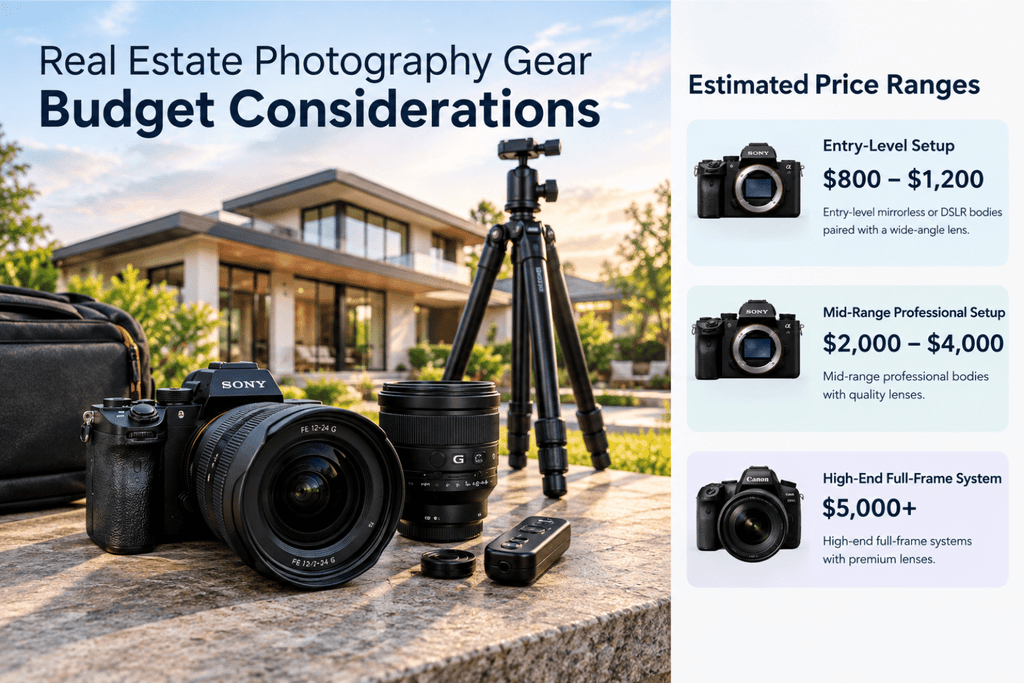
Camera bodies for real estate photography span a wide price range. Entry-level mirrorless or DSLR bodies paired with a wide-angle lens can start around $800 to $1,200 for a complete setup. Mid-range professional setups often run $2,000 to $4,000, while high-end full-frame systems with premium lenses can exceed $5,000.
For most real estate photographers, a mid-range mirrorless body with a quality wide-angle lens offers the best balance of image quality, dynamic range, and cost. Investing in a sturdy tripod and a remote shutter release often improves results more than upgrading to a more expensive camera body.
Conclusion
Choosing the right camera for real estate photography comes down to balancing sensor performance, dynamic range, and lens compatibility against your budget. Mirrorless cameras currently lead the pack for most professionals, thanks to their lighter weight and strong low-light performance, but a well-configured DSLR can still deliver excellent results. Ultimately, a good camera provides the foundation for great real estate photos, but consistent technique, proper settings, and quality post-production editing are what truly separate professional listings from amateur ones.
Read more:
Day-to-Dusk Real Estate Editing vs. Twilight Photography Explained
What Is Window Pull Editing? How to Fix Blown-Out Windows in Real Estate Photos
Professional Real Estate Editing in the AI Era