
Hit enter to search or ESC to close
Trending Now



A property photo taken during golden hour sells a lifestyle, not just a house. The warm sky, glowing windows, and soft shadows turn an ordinary listing into something buyers want to imagine themselves living in. However, two very different techniques create that effect: true twilight photography and Day-to-Dusk real estate editing. Many agents and photographers use these terms interchangeably, yet they involve different workflows, costs, and outcomes.
This guide breaks down both methods so you can decide which one matches your budget, timeline, and property type. By the end, you will understand exactly when Day-to-Dusk real estate editing makes more sense than a live twilight shoot, and vice versa.
What Is Twilight Photography?
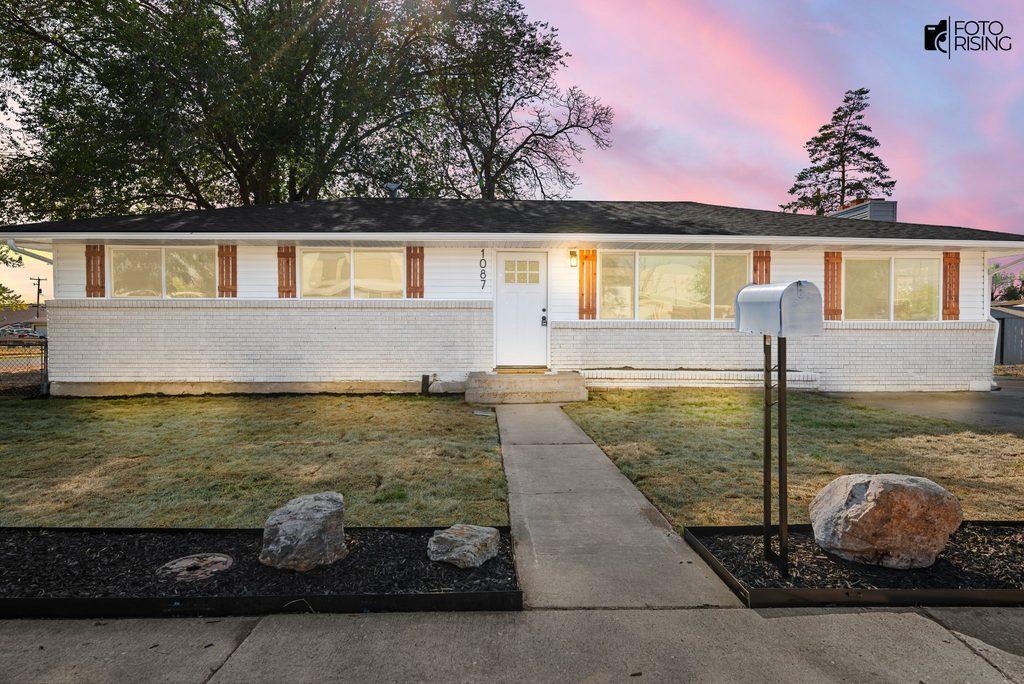
Twilight photography captures a property outdoors during the actual sunset window, usually within a 20 to 30 minute span after the sun dips below the horizon. During this time, the sky still holds a soft blue or purple glow, while interior and landscape lights create a warm, inviting contrast.
How the Twilight Shoot Process Works
First, the photographer arrives at the property before sunset to prepare interior lighting, pool lights, and exterior fixtures. Next, they wait for the exact golden window, since timing is everything in this technique. During the shoot, they use bracketed exposures to balance the darkening sky with the artificial light sources. Finally, they blend these exposure layers in post-production to produce one polished image.
Advantages of Twilight Photography
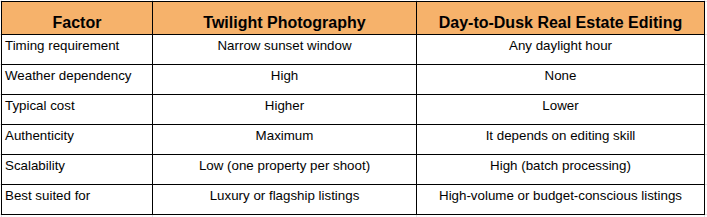
Because everything is captured live, the lighting, shadows, and reflections remain completely authentic. Additionally, the sky color reflects the real weather conditions of that specific evening, which adds a unique, unrepeatable quality to each image.
Drawbacks of Twilight Photography
On the other hand, this method depends heavily on clear weather, so a cloudy or rainy evening can ruin an entire shoot. Furthermore, the cost tends to be higher since it requires a dedicated crew, lighting equipment, and extended on-site time. Since only one property can be photographed per sunset window, this approach also limits how many listings a photographer can handle in a single week. If the crew misses that narrow window, they must reschedule for another day, which delays marketing timelines even further.
What Is Day-to-Dusk Real Estate Editing?
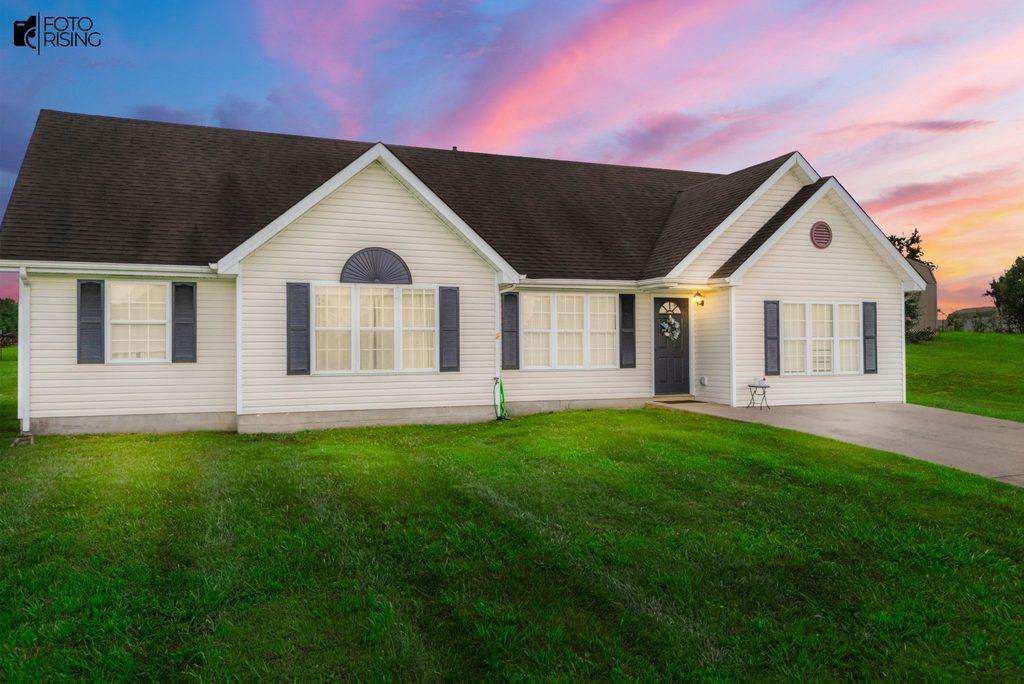
Unlike a live twilight shoot, this technique, often called Day-to-Dusk real estate editing starts with a standard daytime photograph. Editors then use software such as Photoshop or specialized AI tools to transform the sky, adjust the overall lighting, and simulate a warm evening atmosphere.
How the Editing Process Works
To begin, the photographer captures the property during regular daylight hours, which removes any dependency on sunset timing. The image then goes to an editing team or an AI-powered platform. From there, editors replace the sky, correct the color temperature, and digitally illuminate windows to mimic interior lighting. Most providers return the finished image within a few hours to two days, depending on the service level.
Advantages of This Technique
Since the process does not rely on weather or a specific time slot, photographers can shoot properties at their convenience. Moreover, the overall cost stays lower because no lighting crew or after-hours labor is required. This efficiency also allows agents to process multiple listings simultaneously, which suits high-volume real estate teams. As an added benefit, editors can experiment with different sky styles until the image matches the desired mood.
Drawbacks of This Approach
That said, poorly executed edits can look artificial, particularly when daytime shadows do not match the simulated evening light. In some regions, MLS platforms also require disclosure when a listing photo has been digitally altered. Consequently, this method demands either a skilled editor or a high-quality AI tool to avoid an unnatural result.

Twilight vs. Day-to-Dusk Editing: A Side-by-Side Comparison
When Should You Choose Real Twilight Photography?
Twilight shoots work best for luxury homes, estates, or properties with standout features like a pool, waterfront view, or dramatic landscaping. If your marketing budget allows for a signature hero image, this technique delivers unmatched authenticity. It also makes sense for listings with a prime location, since real sunset light naturally enhances a skyline or waterfront view.
When Should You Choose the Edited Approach?
If you manage several listings and need fast turnaround, Day-to-Dusk Real Estate Editing becomes the more practical choice. It also works well in regions with unpredictable weather, where scheduling a live sunset shoot is risky. For mid-range or entry-level properties, this technique delivers strong visual impact without the added expense of a twilight crew. Finally, when a listing needs marketing-ready photos within hours rather than days, editing offers the speed that live photography cannot match.
Final Thoughts
Neither method is universally better; each simply serves a different purpose. Twilight photography remains the gold standard for authenticity and works best on premium properties with a marketing budget to match. Meanwhile, this editing technique offers a flexible, cost-effective alternative that scales easily across multiple listings.
As AI-powered tools continue to improve, the gap in realism between the two methods keeps narrowing. For agents who need speed, consistency, and control over their photo budget, day-to-dusk real estate editing is quickly becoming the smarter default choice without sacrificing visual appeal.
Read More
What Is Window Pull Editing? How to Fix Blown-Out Windows in Real Estate Photos
Sky Replacement for Real Estate Photos: A Smart Way to Elevate Listings
One response to “Day-to-Dusk Real Estate Editing vs. Twilight Photography Explained”
[…] more:Day-to-Dusk Real Estate Editing vs. Twilight Photography ExplainedWhat Is Window Pull Editing? How to Fix Blown-Out Windows in Real Estate PhotosProfessional Real […]