
Hit enter to search or ESC to close
Trending Now



Open any real estate app today and you'll see the difference a good photo makes. A listing with bright, clean, well-composed images gets clicked. One with dark rooms and crooked walls gets scrolled past in half a second. That's the whole game in real estate marketing: the photo either stops someone or it doesn't.
Over the past couple of years, AI editing tools have exploded. Apps like Luminar AI, Photoshop's generative fill, and a dozen real estate-specific plugins now promise to fix a photo in seconds. Upload a raw shot, click a button, and the sky turns blue, the room brightens, and the grass turns green. It sounds like editors might be out of a job soon.
But here's the thing, they're not. Professional real estate editing is still doing work that AI, on its own, simply can't do well. And if you're an agent, photographer, or broker trying to decide how to handle your listing photos, it's worth understanding why.
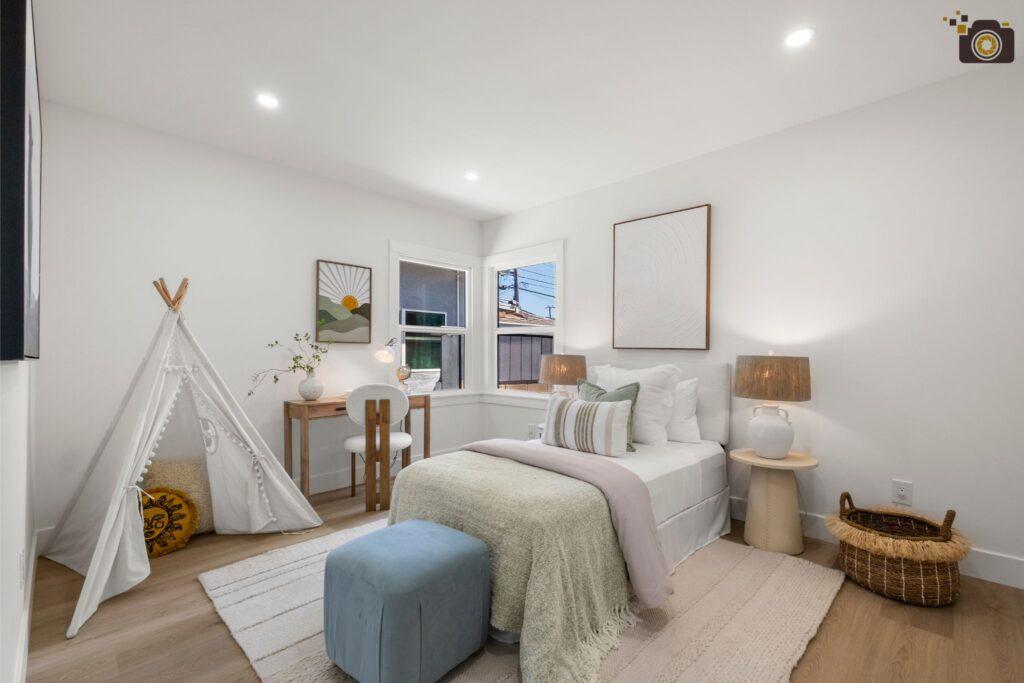
The Rise of AI in Real Estate Photo Editing
Let's give credit where it's due. AI tools have gotten genuinely useful for real estate photography, and a lot of photographers now use them as part of their normal workflow.
The tools everyone's talking about
Names like Luminar Neo, Skylum, Photoshop's Neural Filters, and various real estate-specific apps (think HDR Photo Pro or Photomatix with AI presets) have become common in a photographer's toolkit. Some brokerages even have AI editing built into their listing software now, so agents can snap a photo on their phone and get an edited version back in under a minute.
What AI actually does well
To be fair, AI is genuinely good at a few specific things:
- Removing simple backgrounds or objects, like a trash can in the driveway
- Swapping out a gray, boring sky for a blue one
- Basic color and exposure correction
- Batch processing dozens of photos at once, which saves a ton of time
Why speed and cost matter
For agents on a budget or photographers shooting five listings in a day, AI editing is fast and cheap. You don't need to wait 24 hours for a return. You don't need to pay per photo. That convenience is real, and it's part of why so many people have started leaning on it.
Where AI Falls Short Compared to Professional Real Estate Editing
Here's where things get more complicated. AI is fast, but fast doesn't always mean good, and in real estate, "good enough" photos can quietly cost you a sale.
Lighting doesn't always cooperate
AI tools are trained on huge datasets of "typical" photos, so they tend to apply the same fix regardless of the actual lighting in your specific room. A photo taken at 2pm with harsh sun coming through a window needs different treatment than one taken at dusk with warm interior lighting. AI often flattens both into the same generic look, and it shows.
The "uncanny valley" problem
You've probably seen it, a real estate photo where the sky looks a little too perfect, almost cartoonish. Or a lawn that's suspiciously neon green. That's AI overcorrecting. Buyers notice, even if they can't say exactly why the photo looks fake. It creates a small, subconscious distrust before they've even set foot in the house.
AI doesn't understand what sells a house
This is the big one. A skilled human editor knows that a kitchen photo needs to draw the eye toward the counters and natural light, not the ceiling fan. They know a slightly darker, moodier edit works for a rustic cabin listing, while a bright, airy edit works for a modern condo. AI doesn't think about buyer psychology, it just applies a formula.
The legal and ethical gray area
There's also a real risk here. Over-editing a photo to hide water stains, cracks, or clutter can cross into misrepresentation. Most AI tools don't know or care about local real estate disclosure laws. A human editor, especially one who's worked in the industry a while, knows where that line is and stays on the right side of it.
Why Professional Real Estate Editing Still Matters
So if AI has limits, what does a professional editor actually bring to the table that a $9-a-month app can't?
A trained eye for composition and light
Professional editors don't just brighten a photo, they balance it. They know how to bring out detail in shadows without blowing out the windows, how to keep colors looking true to life, and how to make a room feel warm and inviting rather than sterile.
Consistency across the whole listing
Buyers scroll through 20, 30, sometimes 40 photos of a single listing. If every third photo has a slightly different color temperature or exposure, it looks unprofessional, even if each individual photo is fine. A human editor keeps the whole set consistent, which matters more than people realize.
Fixing the tricky stuff
Some problems just need a human touch, pulling detail out of a bright window without losing the sky outside, straightening verticals so walls don't look like they're leaning, or converting a daytime shot into a convincing twilight photo. These are technical skills that take years to get right, and AI still struggles with them.
Understanding what actually sells
A good editor has seen thousands of listings and knows what catches a buyer's attention. They'll edit a luxury property differently than a starter home because the buyer expectations are different. That kind of judgment call isn't something you can automate, at least not yet.
Extra care for high-end listings
For luxury properties especially, agents often want custom retouching, removing power lines from a backyard shot, enhancing a pool at dusk, or blending multiple exposures into one perfect image. This kind of detailed work is still firmly in professional editor territory.


The Business Impact of Quality Editing
This isn't just about photos looking nice. It affects real numbers.
Listings move faster with better photos
Multiple studies on real estate marketing have shown that professionally edited photos correlate with shorter time on market and more showing requests. Buyers browse listings the same way they browse anything online: fast and mostly on gut feeling. A polished photo gets a second look. A flat, poorly lit one doesn't.
Trust matters more than people think
When photos look realistic and well-composed, buyers trust the listing more. When photos look overly filtered or fake, that trust drops, and sometimes it leads to disappointment (or complaints) once buyers see the property in person. That gap between photo and reality is exactly what professional editing avoids.
The real ROI question
Yes, AI editing is cheaper upfront. But if a listing sits longer, gets fewer showings, or creates buyer pushback because the photos didn't match reality, that "savings" disappears fast. A few extra dollars per photo for a professional edit is a small price against the cost of a stale listing.
How to Choose a Professional Real Estate Editing Service
If you're convinced professional editing is worth it, here's what to actually look for.
What to check before you commit
- Turnaround time: 24 to 48 hours is standard for most services
- Portfolio quality: ask to see before-and-after examples, not just finished shots
- MLS compliance: make sure edits follow local listing rules around accuracy
- Communication: a good service will ask about your style preferences, not just apply a default filter
Questions worth asking
- Do real people review every photo, or is it mostly automated?
- What's your revision policy if I'm not happy with the first pass?
- Can you match a specific style I've used before?
Red flags to watch for
Be cautious of services that lean entirely on AI with no human review step or that apply the same heavy-handed filter to every photo regardless of the property. If the "before and after" samples all look identically over-processed, that's usually a sign of an automated pipeline with no real editor behind it.
A few names worth knowing
The professional real estate editing space has a handful of established players worth checking out if you're comparing options. BeatColor is known for its HDR blending and virtual twilight conversions, combining AI-assisted speed with a manual review step before delivery. PhotoUp has built a strong reputation around virtual staging and subscription-based editing packages for busy photographers. BoxBrownie stands out for floor plans and virtual renovation work, alongside quick turnaround editing. And Virtuance offers a bundled approach, pairing photography and editing into one service.
Each has its own strengths, so it's worth looking at a few sample edits before deciding which style fits your listings best.
Final Thoughts
AI has genuinely changed how fast real estate photos can get edited, and there's nothing wrong with using it for quick, low-stakes touch-ups. But when it comes to photos that actually need to sell a property, the ones that convince someone to book a showing, a trained human eye still makes the difference.
As AI continues to reshape the industry, the properties that stand out will still be the ones edited with a human eye for detail.
Read more:
Flambient Photo Editing: Why AI Is Not Enough for This Technique